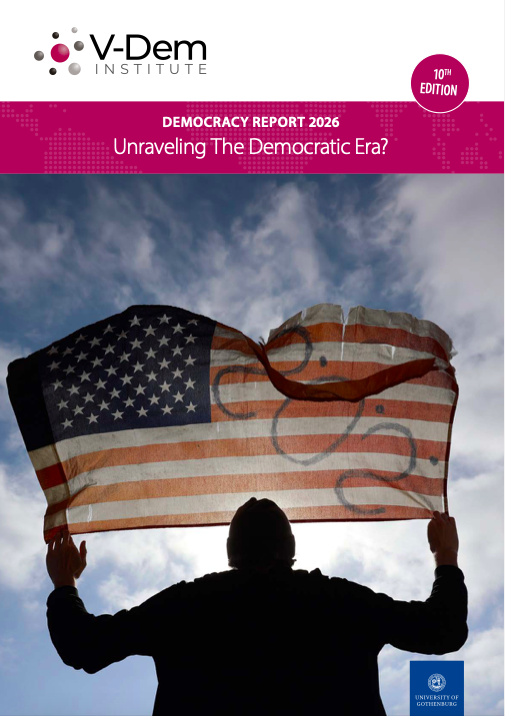
A new report from the V-Dem Institute, drawing on the expertise of more than 4,200 scholars and country experts, warns that democracy is rapidly declining across the world, including throughout the UNECE region.
According to the Democracy Report 2026, democracy for the “average global citizen” has fallen back to 1978 levels, erasing many of the gains associated with the so-called “third wave of democratization” that began in Portugal in 1974.
The report paints a particularly alarming picture for Europe and North America:
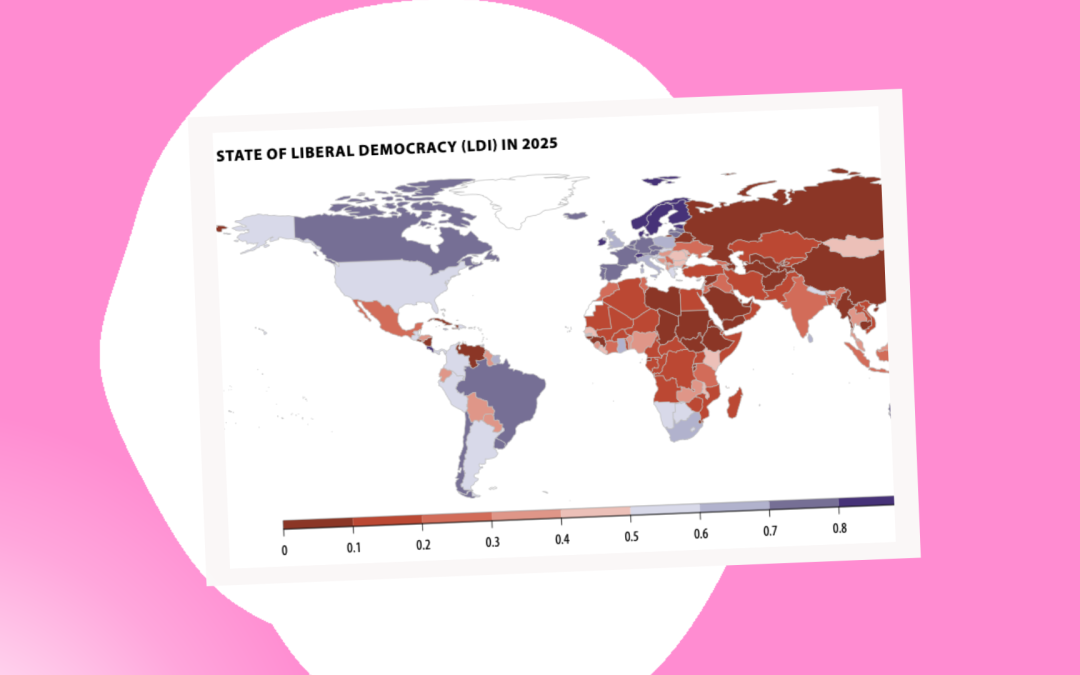
The level of democracy in Western Europe and North America is now at its lowest level in more than 50 years.
The United States has lost its status as a “liberal democracy” for the first time in over half a century.
The European Union is “greatly affected” by autocratization trends, with seven EU member states identified as autocratizing, alongside the United Kingdom and the United States.
Among the newly identified autocratizing countries in Europe are Croatia, Italy, Slovakia, Slovenia, and the United Kingdom.
The report also highlights the growing use of authoritarian tactics:
Freedom of expression is now the most attacked democratic principle globally, declining in 44 countries.
Media censorship remains the most common tactic among autocratizing governments, used in 73% of autocratizing countries.
Repression of civil society now affects 68% of autocratizing countries.
The report reserves particular concern for developments in the United States, warning that “the speed with which [the US] democracy is currently dismantled is unprecedented in modern history.”
Today, 74% of the world’s population lives under autocratic rule, while only 7% live in what the report classifies as “liberal democracies.”
A note on the language of “liberal democracy”
At Holding the Line, we also recognise that terms such as “liberal democracy” are not politically neutral. Many feminist, decolonial, Indigenous, anti-racist, and Global South scholars have long critiqued liberal democracy as a historically Western political model that emerged alongside colonialism, capitalism, patriarchy, and racial hierarchy.
From a decolonial perspective, democracy cannot simply be reduced to elections, institutions, or market-based governance structures. Liberal democratic systems have often coexisted with colonial violence, border regimes, extractivism, racial exclusion, militarisation, and the suppression of Indigenous sovereignty.
At the same time, the global rise of authoritarianism, anti-rights mobilisation, attacks on civil society, media censorship, and restrictions on bodily autonomy represent real and escalating threats — particularly for feminist, LGBTQI+, environmental, Indigenous, migrant, and racial justice movements.
For us, this moment requires holding two truths simultaneously:
rejecting the myth that Western liberal democracy represents the final or universal model of justice;
while also resisting the accelerating erosion of civic space, human rights protections, collective freedoms, and democratic participation.
As authoritarian politics deepen across the UNECE region and beyond, feminist and decolonial movements continue imagining and building “democracy otherwise”, grounded in solidarity, collective care, ecological justice, self-determination, and accountability beyond colonial systems of power.
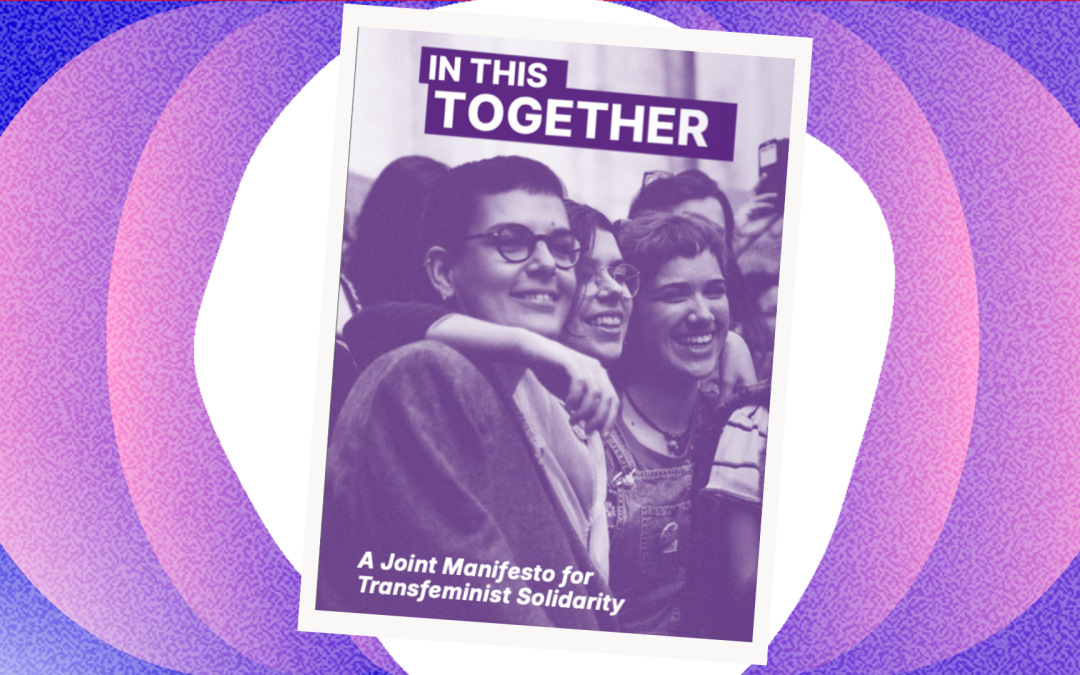
Holding the Line express its support and join a broad coalition of feminist, queer, anti-racist and human rights organisations in signing the Joint Manifesto for Transfeminist Solidarity. At a time of growing anti-gender backlash across Europe and beyond, the manifesto sends a clear message: there is no intersectional feminism without trans solidarity.
The manifesto speaks to the interconnected realities shaping our political moment, from transphobia and misogyny to racism, xenophobia and democratic erosion, while calling for a feminist future rooted in solidarity rather than exclusion. We welcome this initiative as an important step towards building stronger cross-movement alliances that refuse divide-and-rule politics and instead defend human rights, bodily autonomy, and justice for all.
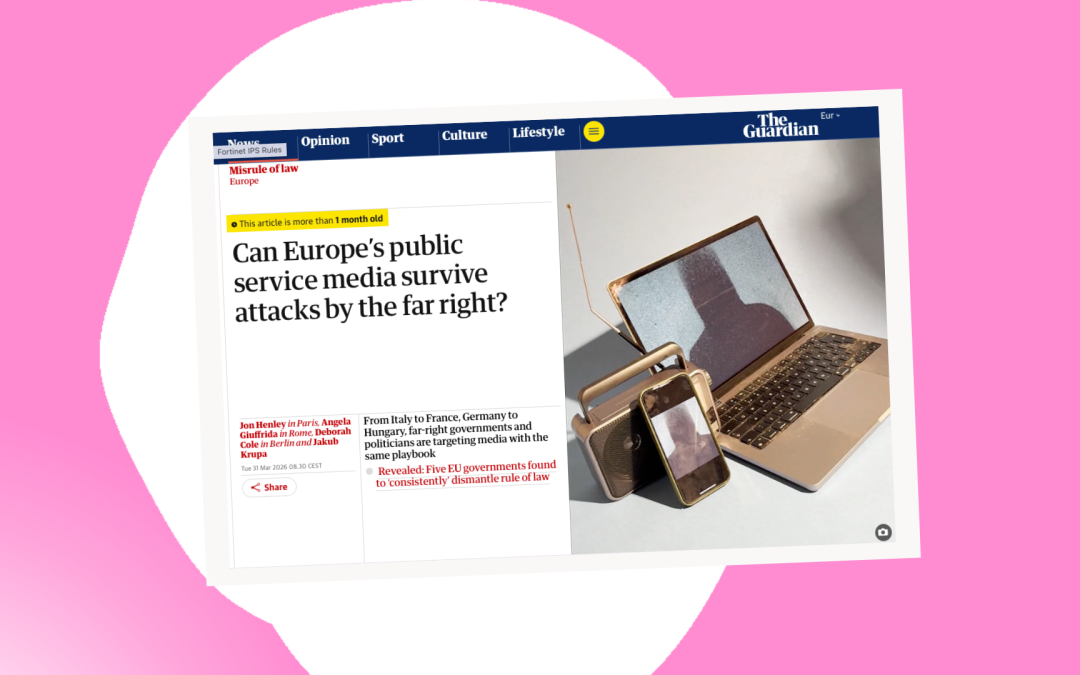
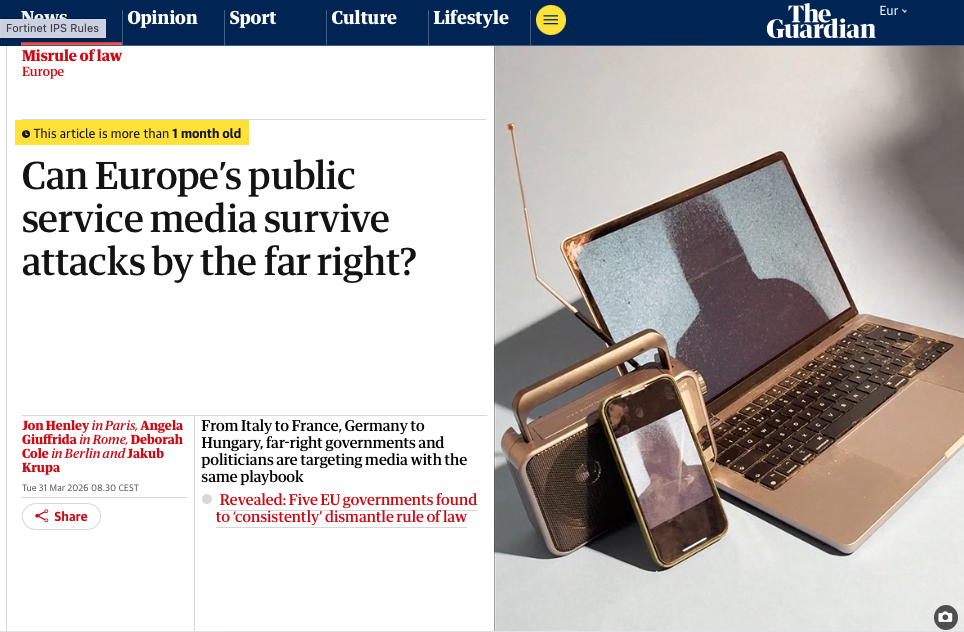
Across the UNECE region, public debate is increasingly shaped by attacks on independent media, growing political pressure on journalists, and the normalisation of anti-rights narratives.
Sweden is no exception.
For years, the far right in Sweden has claimed that public service media is biased towards the left. Yet recent data from the Swedish think tank Katalys showed that right-wing voices dominated speaking time in several major public service debate programmes over a six-month period. At the same time, political pressure on independent and critical journalism continues to intensify.
Now, amid budget cuts driven by a right-wing government supported by the far right, we are seeing the consequences more clearly.
Programmes such as 30 minuter, known for persistent and critical political interviews, are being scaled back or cancelled. Established current affairs formats are being merged or restructured. Independent and smaller progressive media outlets have for years warned about shrinking press support and increasingly hostile conditions for critical journalism. What once primarily affected smaller outlets is now beginning to impact more established media institutions as well.
This is not simply a Swedish media story. It reflects a broader pattern visible across the UNECE region and beyond.
Across multiple countries, far-right and anti-rights actors have invested heavily in shaping public discourse. They understand that controlling narratives is a form of political power. Attacks on “wokeness”, diversity initiatives, gender equality, climate justice, anti-racism work, and independent journalism are deeply interconnected. They are part of a wider effort to shift the Overton window. Meaning, moving ideas once considered extreme closer to the political mainstream.
At the same time, social media platforms increasingly reward outrage, polarisation, and disinformation. Independent journalism, investigative reporting, and public accountability become harder to sustain in an environment driven by clicks, algorithms, and political hostility.
This matters profoundly for democracy.
When journalists no longer have the resources, editorial independence, or institutional support to investigate power critically, misinformation does not simply circulate, it goes unchallenged.
We need journalism that:
asks difficult follow-up questions,
investigates who benefits from political narratives,
challenges disinformation,
tracks attacks on rights and democracy,
and connects seemingly isolated developments into larger political patterns.
Without this, authoritarian and anti-rights actors gain space to normalise harmful narratives.
The weakening of public service and independent media also cannot be separated from wider political developments across the region: shrinking civic space, growing militarisation, attacks on gender equality and LGBTQI+ rights, rising nationalism, and increasing hostility towards civil society organisations.
These patterns reinforce each other.
The far right does not only seek electoral victories. It also seeks to reshape the institutions that produce public knowledge: universities, media, culture, education, and international institutions. Weakened independent media and poor information integrity create enabling conditions for anti-rights and anti-gender actors to spread harmful narratives with less resistance.
This is why defending independent journalism is not a side issue. It is part of defending democracy itself.
And while the pressures are serious, resistance is also growing. Across the region, journalists, activists, feminist movements, independent media outlets, and civil society organisations continue to hold the line, documenting abuses, exposing disinformation, and insisting that democratic accountability still matters.
Because when critical journalism weakens, authoritarianism rarely stays far behind.
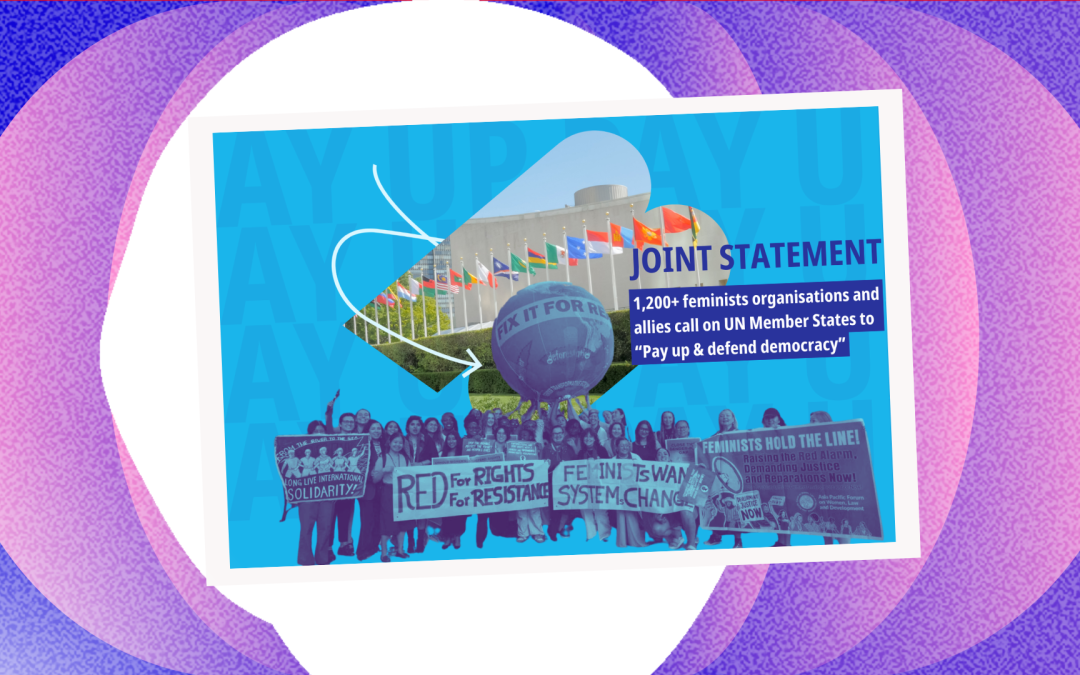
Holding the Line has joined over 1,200 feminist organisations and activists in signing a joint statement raising alarm over the growing financial crisis facing the United Nations and its devastating consequences for gender equality, human rights, and multilateral cooperation.
At a time of escalating anti-rights backlash, shrinking civic space, increasing militarisation, and accelerating climate crisis, the weakening of international cooperation and funding structures will disproportionately impact feminist movements, grassroots organisations, and communities already facing systemic injustice.
The statement highlights how funding cuts and political attacks on multilateralism are not neutral budget decisions. They are deeply political. Across the UNECE region and beyond, we are witnessing growing hostility towards gender equality, sexual and reproductive health and rights, anti-racist work, and civil society itself. Feminist organisations are already experiencing severe financial pressure, while demands for movement support continue to increase.
Why does it matter?
Shrinking funding spaces are also becoming a structural enabler for anti-rights and anti-gender actors, weakening the ability of progressive movements to organise, respond, and build long-term resistance.
We signed this statement because feminist movements cannot be expected to “hold the line” without resources, protection, and sustained political commitment. Defending democracy, human rights, gender justice, and climate justice requires collective investment — not austerity, abandonment, or selective solidarity.
Buy a TV, get pregnant – and get your money back. This may sound like satire, but it is real. Electronics retailer Power (formerly MediaMarkt) has launched the “Baby Bonus”: if you become pregnant within 30 days of your purchase, you get a full refund in store credit. Their slogan: “Now we ensure that Sweden grows by promoting our offers.”
Meanwhile, tech figures like Elon Musk and Jeff Bezos have for years been warning Europe and North America of an alleged “population collapse.” Musk has called it civilisation’s greatest threat and has made it his personal mission to father as many children as possible.
Such statements do not come out of nowhere. They connect to right-wing populist ideas that low birth rates are a national threat, and to anti-gender rhetoric claiming that feminism, LGBTQI+ rights and critical race theory have gone ‘too far.’ At the same time, migration is rejected as a possible solution – as we saw in the conversation between Musk and the far-right nationalist AfD leader Alice Weidel.
Now we see the same logic in Swedish advertising. Power even suggested that Swedes spend more time fiddling with their phones than with each other, claiming their campaign would “give a boost to childbirth.”
For civil society working on gender equality, justice and a green transition, this is not just a quirky PR idea. It is part of a global pattern. Tech giants push pronatalism with arguments that closely resemble those of far-right and anti-gender movements. Companies join in as they chase growth, legitimising the idea that population decline is a “crisis” best solved by births – not by migration, redistribution or stronger care policies. The result: reproductive politics are trivialised into a consumer issue, with responsibility shifted onto individuals.
Another dimension cannot be ignored: tech billionaires like Musk and Bezos have built their fortunes on exploitation of natural resources and labour. Oxfam’s latest report shows billionaire wealth growing three times faster than the economy at large. In this light, pronatalism is not only ideology, but also a way to secure future consumers in a system that already fuels inequality and the climate crisis.
The timing is no coincidence. Pronatalist narratives gain traction as governments move resources away from welfare and climate action into militarisation. We have seen this before in Europe: in the first half of the 20th century, women were tasked with “building the nation” through childbirth. Then as now, demographic anxieties were instrumentalised to restrict reproductive rights, scapegoat migration, and advance exclusionary nationalist agendas.
If we treat declining birth rates as a crisis but ignore migration, care and redistribution, we have already chosen nationalism over justice.