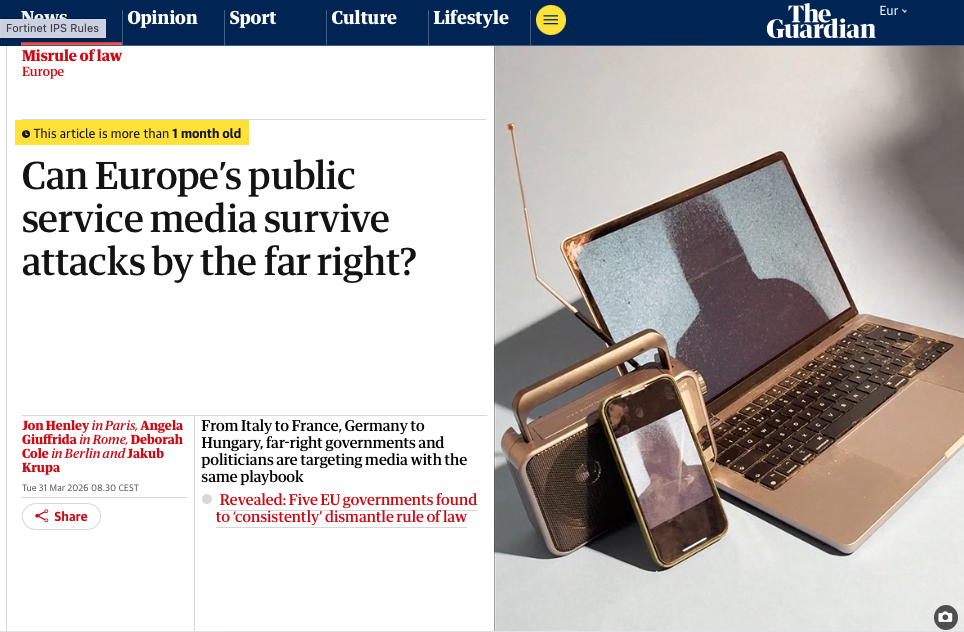
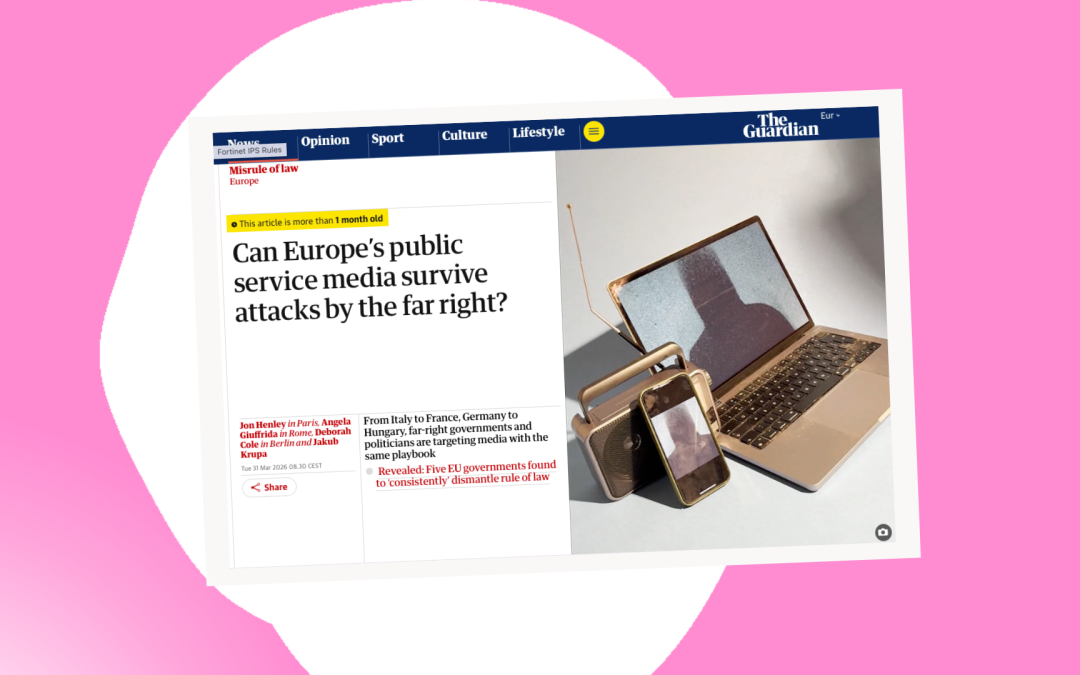
Across the UNECE region, public debate is increasingly shaped by attacks on independent media, growing political pressure on journalists, and the normalisation of anti-rights narratives.
Sweden is no exception.
For years, the far right in Sweden has claimed that public service media is biased towards the left. Yet recent data from the Swedish think tank Katalys showed that right-wing voices dominated speaking time in several major public service debate programmes over a six-month period. At the same time, political pressure on independent and critical journalism continues to intensify.
Now, amid budget cuts driven by a right-wing government supported by the far right, we are seeing the consequences more clearly.
Programmes such as 30 minuter, known for persistent and critical political interviews, are being scaled back or cancelled. Established current affairs formats are being merged or restructured. Independent and smaller progressive media outlets have for years warned about shrinking press support and increasingly hostile conditions for critical journalism. What once primarily affected smaller outlets is now beginning to impact more established media institutions as well.
This is not simply a Swedish media story. It reflects a broader pattern visible across the UNECE region and beyond.
Across multiple countries, far-right and anti-rights actors have invested heavily in shaping public discourse. They understand that controlling narratives is a form of political power. Attacks on “wokeness”, diversity initiatives, gender equality, climate justice, anti-racism work, and independent journalism are deeply interconnected. They are part of a wider effort to shift the Overton window. Meaning, moving ideas once considered extreme closer to the political mainstream.
At the same time, social media platforms increasingly reward outrage, polarisation, and disinformation. Independent journalism, investigative reporting, and public accountability become harder to sustain in an environment driven by clicks, algorithms, and political hostility.
This matters profoundly for democracy.
When journalists no longer have the resources, editorial independence, or institutional support to investigate power critically, misinformation does not simply circulate, it goes unchallenged.
We need journalism that:
- asks difficult follow-up questions,
- investigates who benefits from political narratives,
- challenges disinformation,
- tracks attacks on rights and democracy,
- and connects seemingly isolated developments into larger political patterns.
Without this, authoritarian and anti-rights actors gain space to normalise harmful narratives.
The weakening of public service and independent media also cannot be separated from wider political developments across the region: shrinking civic space, growing militarisation, attacks on gender equality and LGBTQI+ rights, rising nationalism, and increasing hostility towards civil society organisations.
These patterns reinforce each other.
The far right does not only seek electoral victories. It also seeks to reshape the institutions that produce public knowledge: universities, media, culture, education, and international institutions. Weakened independent media and poor information integrity create enabling conditions for anti-rights and anti-gender actors to spread harmful narratives with less resistance.
This is why defending independent journalism is not a side issue. It is part of defending democracy itself.
And while the pressures are serious, resistance is also growing. Across the region, journalists, activists, feminist movements, independent media outlets, and civil society organisations continue to hold the line, documenting abuses, exposing disinformation, and insisting that democratic accountability still matters.
Because when critical journalism weakens, authoritarianism rarely stays far behind.